Posts filed under ‘News’
A pioneer country? A history of Norwegian climate politics

“A pioneer country? A history of Norwegian climate politics” Climatic Change, (Online March 2016), 1-13. Journal edition 151:1 (2018), 29-41.
Download PDF.
The shift away from ecology towards climatology in Norwegian environmental policy in the late 1980s and 1990s was not accidental. A main mover was the Labor Party politician Gro Harlem Brundtland who did not want to deal with unruly and highly vocal Deep Ecologists. Better then to start afresh with a different set of environmental scholars appealing to the technocratic tradition within the Labor Party. Instead of changing the ethical and social ways of dealing with environmental problems as the Deep Ecologists were advocating, she was looking for technological and economic solutions. And she mobilized an international regime of carbon capture storage (CCS), tradable carbon emissions quota (TEQs), and clean development mechanisms (CDMs), all of which eventually were approved in Kyoto in 1997. This move towards technocracy and cost-benefit economics reflects a post-Cold War turn towards utilitarian capitalism, but also a longing to showcase Norway as an environmental pioneer country to the world. The underlying question was how to reconcile the nation’s booming petroleum industry with reduction in climate gas emissions. Should the oil and gas stay underground and the country strive towards the ecologically informed zerogrowth society the Deep Ecologists were envisioning? Or could growth in the petroleum industry take place without harming the environment as the Labor Party environmentalists argued?
Global Design: Elsewhere Envisioned
 Peder Anker, Louise Harpman, Mitchell Joachim, Global Design: Elsewhere Envisioned (Munich: Prestel, 2014).
Get the book:

This book examines the possibilities for scaling design solutions to address global warming.
Global warming poses new challenges to the architecture, landscape architecture, and urban design communities. The immediate response has been a turn toward a host of energy-saving technologies. What has rarely been addressed, however, is the problem of scale. How can designers make sure that global solutions do not come at the expense of local cultures and environments? By placing human rational, emotional, technological, and social needs at the center of our environmental concerns, this book proposes a new global design initiative. The aim is to develop a language of design that can create proximity between individual responsibility and the current global environmental crisis. These featured projects showcase leading-edge design innovations at multiple scales. Global Design directors Peder Anker, Louise Harpman, and Mitchell Joachim discuss various ways in which design can reformat the unfortunate separation between humans and the natural world.
Review
Shaunacy Ferro, “7 Ways Architecture Can Tackle Global Warming” at FastCompany, Feb. 2015.
My review of The Gaia Hypothesis
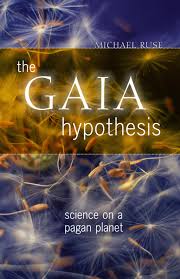 Michael Ruse, The Gaia Hypothesis: Science on a Pagan Planet (Chicago: Chicago University Press 2013).
From Bauhaus to Ecohouse: A Short History of Ecological Design
“From Bauhaus to Ecohouse: A Short History of E cological Design,” in Behind the Green Door: Architecture and the Desire for Sustainability, Helle Benedicte Berg (ed.), (Oslo: Oslo Architecture Triennale, 2013), 129-139.
Order the catalogue here.
The Call for a New Ecotheology in Norway
“The Call for a New Ecotheology in Norway,” Journal for the Study of Religion, Nature and Culture 7:2 (2013), 187-207.
Download PDF
The call for a new ecotheology in Norway began in the early 1970s with environmentally concerned deep ecologists and continued within the Evangelical Lutheran Church of Norway and the university system. Church officials and intellectuals saw ecotheology as an effective way of engaging the young in caring for the Creation. Alongside the eco-philosophical projects of redefining the natural, the deep ecologists also sought to renew religious faith. Norwegian theologians found their questioning of economic growth, technocracy, and industrialism appealing, and they sympathized with their call to save wilderness and their endorsement of outdoor life, rural communities, and modest lifestyles. Deep ecology represented for theologians an opportunity to revive the Church, mobilize a new and younger audience, and address the question of how to behave towards God’s Creation.
从包豪斯到生态建筑 From Bauhaus to Ecohouse

从包豪斯到生态建筑
佩德 安克尔
From Bauhaus to Ecohouse: A History of Ecological Design
Chinese edition of my book
佩德 安克尔所著的《从包豪斯到生态建筑》以哈佛大学设计学院绿色现代课程内容为基础,聚焦于生态学思想与设计的融合,从英国复兴包豪斯的历史开始,至美 国人致力于维护生态世界的愿望止,总结了从20世纪30年代到80年代冷战结束为止生态设计的复杂历史。著名设计师拉斯洛·莫霍伊—纳吉,生物学家、生态 学家朱利安·赫胥黎,包豪斯学校创始人沃尔特·格罗皮乌斯,穹顶建筑师巴克敏斯特·富勒等人与生态建筑的关系都在本书中加以讨论。《从包豪斯到生态建筑》 并不仅为设计史学家和建筑史学家所撰写,同样是科学史和环境史学家的重要读物。
If you can’t read Chinese, click here
Get the Chinese edition here
My review of The Illusory Boundary
 Martin Reuss; Stephen H. Cutcliffe (Editors). The Illusory Boundary: Environment and Technology in History.
Isis, 103:2 (2012), 388-389.
My review of Merchants of Doubt
 Naomi Oreskes and Erik M. Conway. Merchants of Doubt: How a Handful of Scientists Obscured the Truth on Issues from Tobacco Smoke to Global Warming.
Isis, 102:3 (2011), 589-590.
Edvard Munchs Aulamalerier: Fra kontroversielt prosjekt til nasjonalskatt
 Edvard Munchs Aulamalerier: Fra kontroversielt prosjekt til nasjonalskatt (Edvard Munch’s Aula Paintings: From Controversal Project to National Treasure), with Patricia G. Berman, (Oslo: Messel Forlag, 2011).
[Norwegian] I 1911 skulle Universitetet feire sitt hundreårsjubileum. I den anledning ble Aulaen på Karl Johans gate bygget som en storslått gave og markering av institusjonen. De elleve maleriene som pryder Aulaen hang ikke der ved åpningen, men ble alle malt mellom 1909 og 1916 i en atmosfære av kulturpolitisk kontrovers. Munchs Aulamalerier ble malt etter intense interne dragkamper blant kunstekspertisen, for så å forårsake en like spent offentlig debatt om deres kunstneriske verdi. I dag er de en nasjonalskatt. Denne antologien dokumenterer malerienes dramatiske historie fra de første skisser til den tekniske forfatning de nå befinner seg i snart hundre år etter tilblivelsen
Kjøp antologien her
My Interview in Adam Curtis’ BBC TV Documentary
 All Watched Over by Machines of Loving Grace
2. The Use and Abuse of Vegetational Concepts
Article in The Observer “How the ‘ecosystem’ myth has been used for sinister means” by Adam Curtis. Check also out this Curtis interview and documentary Wikipedia page.
Broadcast on BBC Two, 9:00 p.m. Monday, 30 May 2011: A series of films exploring the idea that we have been colonised by the machines we have built. Although we don’t realise it, the way we see everything in the world today is through the eyes of the computers.
This is the story of how our modern scientific idea of nature, the self-regulating ecosystem, is actually a machine fantasy. It has little to do with the real complexity of nature. It is based on cybernetic ideas that were projected on to nature in the 1950s by ambitious scientists. A static machine theory of order that sees humans, and everything else on the planet, as components – cogs – in a system.
But in an age disillusioned with politics, the self-regulating ecosystem has become the model for utopian ideas of human ‘self-organizing networks’ – dreams of new ways of organising societies without leaders, as in the Facebook and Twitter revolutions, and in global visions of connectivity like the Gaia theory.
This powerful idea emerged out of the hippie communes in America in the 1960s, and from counterculture computer scientists who believed that global webs of computers could liberate the world.
But, at the very moment this was happening, the science of ecology discovered that the theory of the self-regulating ecosystem wasn’t true. Instead they found that nature was really dynamic and constantly changing in unpredictable ways. But the dream of the self-organizing network had by now captured our imaginations – because it offered an alternative to the dangerous and discredited ideas of politics.
Check out Stephen Duncombe’s excellent piece “Adam Curtis: Dystopian Dialectics, ” Photoworks, Jan 15, 2014.
Teaser:


 Peder Anker