The Politics of Ecology in South Africa on the Radical Left
“The Politics of Ecology in South Africa on the Radical Left,” Journal of the History of Biology, 37:2 (2004), 303-331.
The South African ecologist and political activist Edward Roux (1903–1966) used evolutionary biology to argue against racism. During the cold-war, he transformed his communist beliefs into advocacy for scientific rationalism, management, and protection of nature against advancing capitalism. These pleas for saving the environment served as a vehicle for questioning the more risky issue of evolution and racial order in society. The link between ecological and political order had long been an important theme among the country’s ecologists and politicians alike. The statesman Jan Christian Smuts’ holistic theory of evolution and racial order inspired the nation’s ecologists to sanctify an ecologically informed racial policy. This idealist informed methodology stood in direct opposition to the materialist approach to ecology of Roux. These methodological debates reflected differing political support from within the Union Party and people on the radical left, respectively. Ecology was of concern to politicians because understandings of the order of nature had direct implications for the racial order of the South African society.
The Philosopher’s Cabin and the Household of Nature
“The Philosopher’s Cabin and the Household of Nature,” Ethics, Policy & Environment, 6:2 (2003), 131-141. [PDF]
Translated into Italian as “Il rifugio del filosofo e la dimora della natura,” Riga 46 (2023), 207-221. [PDF]
Abstract
The etymological origin of ecology in the human house is the point of departure of this article. It argues that oikos is not merely a vague metaphor for ecology, but that built households provide a key to understanding the household of nature. Three households support this claim: the cabins of Henry Thoreau, Aldo Leopold and Arne Næss. This article suggests that their views on the household of nature stand in direct relationship with their respective homes. They also have a distant epistemological bird’s-eye view of nature seen from homes which were located – imaginary or real – on a mountaintop.
The Context of Ecosystem Theory
“The Context of Ecosystem Theory,” Ecosystems, 5:7 (2002), 611-613.
Arthur George Tansley’s paper “The Temporal Genetic Series as a Means of Approach to Philosophy,” published here for the first time, provides the philosophical context for the development of his ecosystem theory. His rejection of idealist reasoning, his concern with ethics, and his long standing interest in Freudian psychology as well as mechanistic reasoning comprised the intellectual underpinnings for his thinking on systems and ecosystem theory.
Download Tansley’s “The Temporal Genetic Series as a Means of Approach to Philosophy”
Outline for a History of Ecological Architecture
“Outline for a History of Ecological Architecture,” M29: Yearbook for the Oslo School of Architecture, Mari Lending (ed.), (Oslo: The Oslo School of Architecture, 2002), 148-154.
From Skepticism to Dogmatism and Back
“From Skepticism to Dogmatism and Back: Remarks on the History of Deep Ecology,” in Philosophical Dialogues, Andrew Brennan and Nina Witoszek (eds.) (Rowman & Littlefield, 1999), 431-443.
The Dream of the Biocentric Community and the Structure of Utopias
“The Dream of the Biocentric Community and the Structure of Utopias,” with Nina Witoszek, Worldviews, 2 (1998), 239-256.
This paper examines the ideal of community as imagined by Arne Naess and the Deep Ecology Movement. In particular the authors address such questions as: Is pluralism of lifestyles reconcilable with the main ideas of the biocentric community? Is liberal justice possible within it? And how realistic is the proposal of education towards a ‘biocentric identity’? The analysis shows that, while the deep ecological vision is by no means ‘fascist’ as some of its critics insist, its inconsistencies, silences and omissions point to an incomplete project which has a dystopian conclusion written into its scenario.
Risk Management, Rationality, and Deep Ecology
“Risk Management, Rationality, and Deep Ecology,” in Environmental Risk and Ethics , Peder Anker (ed.) (Oslo: Centre for Development and the Environment, 1995).
From Bauhaus to Ecohouse: A History of Ecological Design
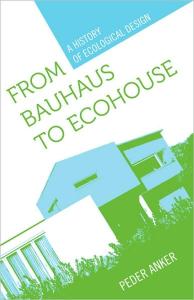
Click for information
Global warming and concerns about sustainability recently have pushed ecological design to the forefront of architectural study and debate. As Peder Anker explains in From Bauhaus to Ecohouse, despite claims of novelty, debates about environmentally sensitive architecture has been ongoing for nearly a century. By exploring key moments of inspiration between designers and ecologists from the Bauhaus projects of the interwar period to the eco-arks of the 1980s, Anker traces the historical intersection of architecture and ecological science and assesses how both remain intertwined philosophically and pragmatically within the still-evolving field of ecological design.
Imperial Ecology: Environmental Order in the British Empire, 1895-1945
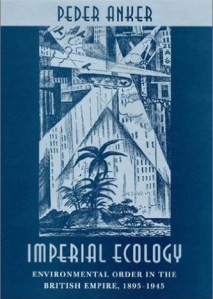
Click for information
From 1895 to the founding of the United Nations in 1945, the promising new science of ecology flourished in the British Empire. Peder Anker asks why ecology expanded so rapidly and how a handful of influential scientists and politicians established a tripartite ecology of nature, knowledge, and society.
On Ultimate Norms in Ecosophy T
“On Ultimate Norms in Ecosophy T” The Trumpeter (1998)
This essay does two things. It offers one possible interpretation of ArneNaess’s ultimate ecophilosophic norms, and it shows how these norms can support the following three statements in the deep ecological platform.


 Peder Anker