Posts filed under ‘Publications’
Computing Environmental Design
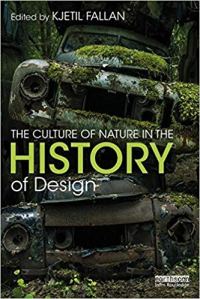
“Computing Environmental Design,” in The Culture of Nature in the History of Design, Kjetil Fallan (ed.), (London: Routledge, 2019), 44-57.
This is the short version of this article. Download PDF here.
Abstract
In December 1964 the Boston Architectural Center organizedthe first conference on the role of computers in architecture – an issue that designers had been pondering since the 1950s. The questionat stake in such debates had been the relationship between artists and machines. Environmental design proved to be an unlikely question that emerged in the discussion, with architect and designer Serge Chermayeff noting that with computers environmental complexities could now come under the purview of architecture. Only a year earlier Chermayeff had published the seminal book Community and Privacy: Toward a New Architecture of Humanismwith Christopher Alexander, wherethe two authors had argued for a humanism that placed environmental concerns at the forefront. At the conference Chermayeff argued that computers constituted a critical tool for analyzing and comprehending environmental complexity, allowing for the integration of the built within the natural environment. “Our survival depends upon our ability to master new complexities” he argued, “with the best technology at our disposal.” This optimism with respect to how computers could help in solving environmental problems was shared among modernist designers, most notably by Richard Buckminster Fuller, but also among ecologists and biologists of the period. Computers could order both the human and natural environment using the same language, thus bringing landscape and architectural design in dialogue. Yet computers of the time were cumbersome to work with and getting access to them was not a matter of course. The architects’ musings about computers ultimately had to do with imagined futures for the design disciplinesand not so much thepractical exigencies of the time. By focusing on Serge Chermayeff’s critical response to the introduction of computers as tools for grasping and communicating complexity, this paper will interrogate the emergence ofcomplexity as an aesthetic and design problem, formative for the introduction of computing to architectural design.
My review of Images of Egypt
 Mari Lending, Eirik Arff Gulseth Bøhn, Tim Anstey (eds.), Images of Egypt, (Oslo: Pax, 2018).
Arkitketur N, 101 (2019), 112.
Download PDF (in Norwegian)
My review of Malarial Subjects
 Rohan Deb Roy, Malarial Subjects: Empire, Medicine and Nonhumans in British India, 1820–1909. (New York: Cambridge University Press, 2017).
The Architecture of Closed Worlds

“Commentary” in Lydia Kallipoliti, The Architecture of Closed Worlds, (Zürich: Lars Müller Pub., 2018), 175.
My review of Early Ecotheology and Joseph Sittler
 Panu Pihkala, Early Ecotheology and Joseph Sittler (Zürich: Lit Verlag, 2017).
Journal for the Study of Religion, Nature & Culture, 12:2 (2018), 247-248.
My review of National Park Science: A Century of Research in South Africa
 Jane Carruthers, National Park Science: A Century of Research in South Africa (Cambridge: Cambridge University Press, 2017).
Anthropocene Architecture: Design Earth’s Geostories

“Anthropocene Architecture: Design Earth’s Geostories” with Nina Edwards Anker, The Avery Review 29 (Feb. 2018). [PDF]
Republished in: Rania Ghosn and El Hadi Jazairy, Geostories: Another Architecture for the Environment, (Barcelona: Actar, 2018), 206-213.
A review of the exhibition Geostories: Another Architecture for the Environment, created by Rania Ghosn and El Hadi Jazairy, which was on display at the Cooper Union School of Architecture in New York, October 17, 2017–December 2, 2017.
School of the Earth

Peder Anker and Mitchell Joachim (eds.) School of the Earth: Gallatin Reimagined in 2061, (New York: Gallatin School, 2017).
School of the Earth is a vision for what the Gallatin School of Individualized Study at New York University should be like in 2061 at Albert Gallatin’s 300th birthday. The envisioned new school is designed with our planet in mind. It is a school designed to fit the local ecosystem. This book was born from a dedicated class of students lead by professors Peder Anker and Mitchell Joachim. Humans have done enough taking, the students argue, and it is time to start giving back. Giving back to our planet and each other. The world is more connected than ever before and it is only going to become increasingly more intertwined and complicated. School of the Earth is about the necessity of connection, not only from human to human but between nature and people as well. The new vision for the Gallatin School is complete with visionary images and a model created to educate students and the public that not only is it possible for humans to exist while giving back, but that we can help make the planet a better, healthier place for the future as well.
The book, the exhibition, the model, a film, a published manifesto in Confluence, and the web site were the final results made by students of the class “Designing for New Climates: Histories of Adaptation” co-taught with Mitchell Joachim.
Get the book: US $ | GBP £ | EUR €
In the news: WSN and WSN editorial
The Closed World of Biosphere 2
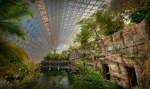
The Closed World of Biosphere 2: Why an Eccentric Ecological Experiment Still Matters 25 Years Later, Edge effects, Dec. 15, 2016.
Including an exchange with Mark Nelson, May 2017.
Untangling Intentions: Teaching the History of Climate Politics
 “Untangling Intentions: Teaching the History of Climate Politics,” in Teaching Climate Change in the Humanities, Stephen Siperstein, Shane Hall and Stephanie LeMenager (eds.), (New York: Routledge, 2016), 272-278. [PDF]


 Peder Anker