NYU Supports Climate Deal Now!

Global Design: Elsewhere Envisioned
 Peder Anker, Louise Harpman, Mitchell Joachim, Global Design: Elsewhere Envisioned (Munich: Prestel, 2014).
Get the book:

This book examines the possibilities for scaling design solutions to address global warming.
Global warming poses new challenges to the architecture, landscape architecture, and urban design communities. The immediate response has been a turn toward a host of energy-saving technologies. What has rarely been addressed, however, is the problem of scale. How can designers make sure that global solutions do not come at the expense of local cultures and environments? By placing human rational, emotional, technological, and social needs at the center of our environmental concerns, this book proposes a new global design initiative. The aim is to develop a language of design that can create proximity between individual responsibility and the current global environmental crisis. These featured projects showcase leading-edge design innovations at multiple scales. Global Design directors Peder Anker, Louise Harpman, and Mitchell Joachim discuss various ways in which design can reformat the unfortunate separation between humans and the natural world.
Review
Shaunacy Ferro, “7 Ways Architecture Can Tackle Global Warming” at FastCompany, Feb. 2015.
My review of The Silwood Circle
 Hannay Gay, The Silwood Circle: A History of Ecology and the Making of Scientific Careers in Late Twentieth-Century Britain (London: Imperial College Press, 2013).
Seeing the Display: Environmentalism’s Ideological Habitat
“Thoreau’ s Walden” at Seeing the Display: Environmentalism’s Ideological Habitat, The Natural History Museum at the Queens Museum, Sept 28.
See the lecture here.
My review of Shaping Ecology: The Life of Arthur Tansley
 Peter G. Ayres, Shaping Ecology: The Life of Arthur Tansley (Hoboken, NJ: Wiley-Blackwell, 2012).
Behind the Green Door: A Critical Look at Sustainable Architecture
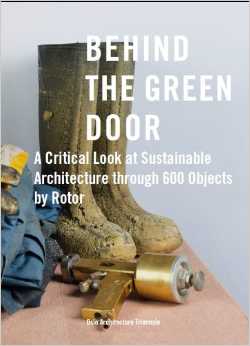 “Comments” in Behind the Green Door: A Critical Look at Sustainable Architecture through 600 Objects by Rotor, (Oslo: Oslo Architecture Triennale, 2014), 27, 169, 178, 203, 210, 214.
Download PDF with my comments here.
Behind the Green Door: A Critical Look at Sustainable Architecture through 600 Objects portrays the prevailing green wave in architecture and the many controversies that surround it. The book is enriched with comments from over 100 international experts.
Quoted in Washington Square News
“Faculty say NYU enables BlackRock’s greenwashing” by Ruqaiyah Zarook, Sept. 1 2021.
“What’s Happening at 181 Mercer?” by Christine Lee, Nov. 6, 2017.
“Gallatin Climate Conference Encourages Change” by Miranda Livingston, Sept. 18 2017.
“New York City Council to vote on disposable grocery bag 10-cent fee” by Carly Krakow, April 4, 2014.
“NYU to take proactive approach to emission reduction,” by Su Sie Park, April 25, 2013.
“GLOBAL Design NYU presents environmental architecture,” by Tatiana Baez, Sept. 24, 2012.
My review of The Gaia Hypothesis
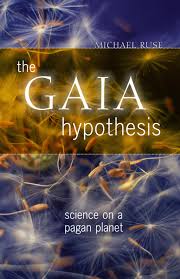 Michael Ruse, The Gaia Hypothesis: Science on a Pagan Planet (Chicago: Chicago University Press 2013).
Cities and Citizenship Symposium

Architects, sociologists and environmentalists explore the intersection between design and the social sciences at large by explicating the concept of “city” and “citizen” in parallel. Cities and Citizenship is a three-day symposium, consisting of a conference series and workshops, that explores how the design of cities can promote a more engaged citizenry. The event will engage leading designers, architects, landscape architects, planners, urbanists, historians, and scientists.
Cities and Citizenship is co-sponsored by the Goethe-Institut New York, Parsons The New School for Design, NYU Gallatin School of Individualized Study and Global Design NYU. The symposium is organized by Alissa Burmeister from the Goethe-Institut New York, Ioanna Theocharopoulou from Parsons The New School for Design, Peder Anker, Louise Harpman, Mitchell Joachim, from Global Design NYU at Gallatin School of Individualized Study, New York University, and is part of the Goethe-Institut’s international Weltstadt: Who Creates the City? initiative.
MARCH 13-15, 2014. DOWNLOAD PROGRAM. All events are free and open to the public. Seating is limited. Please register with wyomingbuilding@newyork.goethe.org by March 12th.
Participants include: Peder Anker, [History of Science, Gallatin School, NYU], Gianpaolo Baiocchi [Sociology, Director of Civic Engagement, Gallatin School, NYU], Matthias Böttger [Architect + Curator, Raumtaktik, Berlin], Susannah Drake [Landscape Architect, dlandstudio], Stephen Duncombe [Sociology, Gallatin School, NYU], Louise Harpman [Architecture, Gallatin School, NYU], Matthias Hollwich [Architect + Co-founder, HWKN], Natalie Jeremijenko [Fine Art + Environmental Studies, NYU], Colin Jerolmack [Environmental Studies + Sociology, NYU], Mitchell Joachim [Architecture, Gallatin School, NYU], Eric Klinenberg [Sociology, NYU], Victoria Marshall [Landscape + Urban Designer, Parsons], Brian McGrath [Architecture, Dean, School of Constructed Environments Parsons], Miodrag Mitrasinovic [Architecture + Urbanism, New School], Mariana Mogilevich [Architecture + Metropolitan Studies, NYU], Vyjayanthi Rao [Anthropology, New School], Eric Sanderson [Senior Conservation Ecologist at WCS], Saskia Sassen [Sociology, Columbia University], Susanne Schindler [Architecture, New School, Candide Journal], Ioanna Theocharopoulou [Architectural History, Parsons], Tyler Volk [Biology + Environmental Studies, NYU], Lynnette Widder [Earth Institute, Columbia University].
Review: Carly Krakow, Peder Anker, Louise Harpman, Mitchell Jocahim, “Cities and Citizenship: Notes from the Conference,” Weltstadt Zeitung, no. 5, April 30, 2014, 3.
From Bauhaus to Ecohouse: A Short History of Ecological Design
“From Bauhaus to Ecohouse: A Short History of E cological Design,” in Behind the Green Door: Architecture and the Desire for Sustainability, Helle Benedicte Berg (ed.), (Oslo: Oslo Architecture Triennale, 2013), 129-139.
Order the catalogue here.


