Computing Environmental Design
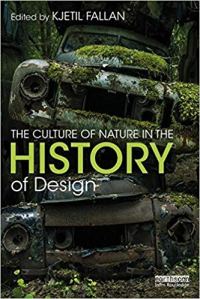
“Computing Environmental Design,” in The Culture of Nature in the History of Design, Kjetil Fallan (ed.), (London: Routledge, 2019), 44-57.
This is the short version of this article. Download PDF here.
Abstract
In December 1964 the Boston Architectural Center organizedthe first conference on the role of computers in architecture – an issue that designers had been pondering since the 1950s. The questionat stake in such debates had been the relationship between artists and machines. Environmental design proved to be an unlikely question that emerged in the discussion, with architect and designer Serge Chermayeff noting that with computers environmental complexities could now come under the purview of architecture. Only a year earlier Chermayeff had published the seminal book Community and Privacy: Toward a New Architecture of Humanismwith Christopher Alexander, wherethe two authors had argued for a humanism that placed environmental concerns at the forefront. At the conference Chermayeff argued that computers constituted a critical tool for analyzing and comprehending environmental complexity, allowing for the integration of the built within the natural environment. “Our survival depends upon our ability to master new complexities” he argued, “with the best technology at our disposal.” This optimism with respect to how computers could help in solving environmental problems was shared among modernist designers, most notably by Richard Buckminster Fuller, but also among ecologists and biologists of the period. Computers could order both the human and natural environment using the same language, thus bringing landscape and architectural design in dialogue. Yet computers of the time were cumbersome to work with and getting access to them was not a matter of course. The architects’ musings about computers ultimately had to do with imagined futures for the design disciplinesand not so much thepractical exigencies of the time. By focusing on Serge Chermayeff’s critical response to the introduction of computers as tools for grasping and communicating complexity, this paper will interrogate the emergence ofcomplexity as an aesthetic and design problem, formative for the introduction of computing to architectural design.
Environmental and Climate History: The Role of History in Society
 I’m teaching a PhD course at the University of Oslo for the Norwegian Graduate School in History: “Environmental and Climate History: The Role of History in Society”, December 16-18, 2019.
Read the report from the course here.
Collapse: Climate, Cities & Culture Berlin


The COLLAPSE: CLIMATE, CITIES and CULTURE exhibition focuses on the design/artist community’s response to environmental urgency, using architectural models, design prototypes, drawings, and art to frame and advance this vitally important conversation. We will contrast and compare examples of design from central Europe to show efforts to find solutions for our current state of planetary peril. The practices and projects selected for this exhibition come from different disciplines and operate at multiple scales, in a range of forms—constructed works, materials and systems research, community development, and speculation. These diverse projects are joined by their shared focus on improving the health and well-being of our fragile planet and all of its occupants. Design will help to determine how we face our current and future collapse.
Berlin NYU at St. Agnes, Alexandrinenstraße 118
June 6-July 11, 2019.
My review of Images of Egypt
 Mari Lending, Eirik Arff Gulseth Bøhn, Tim Anstey (eds.), Images of Egypt, (Oslo: Pax, 2018).
Arkitketur N, 101 (2019), 112.
Download PDF (in Norwegian)
My review of Malarial Subjects
 Rohan Deb Roy, Malarial Subjects: Empire, Medicine and Nonhumans in British India, 1820–1909. (New York: Cambridge University Press, 2017).
Bauhaus Centenary Interview
Bauhaus Centenary interview for Deutsche Welle (DW News), Jan 2nd 2019.

The Architecture of Closed Worlds
“Commentary” in Lydia Kallipoliti, The Architecture of Closed Worlds, (Zürich: Lars Müller Pub., 2018), 175.
My review of Early Ecotheology and Joseph Sittler
 Panu Pihkala, Early Ecotheology and Joseph Sittler (Zürich: Lit Verlag, 2017).
Journal for the Study of Religion, Nature & Culture, 12:2 (2018), 247-248.
My review of National Park Science: A Century of Research in South Africa
 Jane Carruthers, National Park Science: A Century of Research in South Africa (Cambridge: Cambridge University Press, 2017).
Collapse: Climate, Cities & Culture

COLLAPSE: CLIMATE, CITIES & CULTURE focuses on the design community’s response to environmental urgency, using architectural models, design prototypes, drawings, and videos to frame and advance this vitally important conversation. COLLAPSE is not a dystopian future-scape, but is in fact our “right now.” The Directors of Global Design NYU believe that designers must join or initiate interdisciplinary efforts to find solutions for our current state of planetary peril.
COLLAPSE estimates that one species goes extinct every seven minutes and this rate may be up to 1000 times faster than evolutionary norms. In our exhibit design, the empty cages represent loss, or voids, in our natural world. They are like coffins for species whose graves we will never know, whose lives we will never learn about. The exhibit design also features over a ton and a half of e-waste, lent to us by environmental waste management company. E-waste (products with batteries or cords) contain poisonous heavy metals, chemical flame retardants, and polychlorinated biphenyls (PCBs). As our world becomes more interconnected, our production of e-waste is skyrocketing. Interconnectivity may save the planet in some ways, but its harm is already evident.
The practices and projects selected for this exhibition come from a myriad of disciplines and operate at multiple scales, in a range of forms—constructed works, materials and systems research, community development, speculation, and philosophy. These diverse projects are joined by their shared focus on improving the health and well-being of our fragile planet and all of its occupants. Design will help to determine how we face our current and future collapse.
The show featured contributions from more than thirty designers, including AGENCY, Alejandro Zaera-Polo, Alexander Felson, Anna Bokov, Anna Dyson, Archi-Tectonics, Architecture and Urban Design Lab, Axel Kilian, BiotA Lab, Carl Skelton, DESIGN EARTH, Experimental Architecture Group, Fernanda Canales, Forrest Meggers, Ghiora Aharoni Design Studio, Harrison Atelier, Jenny Sabin Studio, Julia Watson Studio REDE, Karen Holmberg, Maider Llaguno-Munitxa, Mark Foster Gage Architects, Mark Shepard and Moritz Stefaner, MASS Design Group, Mathur/Da Cunha, Mitch McEwen, NADAAA, nea studio, Nurhan Gokturk, Patrick Nash, pneumastudio/Cathryn Dwyre + Chris Perry, Rhett Russo, School of the Earth, SITE @ Princeton University, SO-IL, Terreform ONE, WXY, and Young & Ayata
Global Design NYU, Collapse: Climate, Cities & Culture, directed and curated by Peder Anker, Louise Harpman, Mitchell Joachim, The Gallatin Galleries NYC, June 12-29, 2018.
Seminar, Center for Architecture, 6-8pm, Oct. 3, 2018,


 Peder Anker