Posts filed under ‘Publications’
Ecological Communication at the Oxford Imperial Forestry Institute
 “Ecological Communication at the Oxford Imperial Forestry Institute,” in Cultivating the Colonies: Colonial States and their Environmental Legacies, Christina Folke Ax (et.a.) (ed.) Ohio University Press, 2011. [PDF]
The essays collected in Cultivating the Colonies demonstrate how the relationship between colonial power and nature reveals the nature of power. Each essay explores how colonial governments translated ideas about the management of exotic nature and foreign people into practice, and how they literally “got their hands dirty” in the business of empire. The eleven essays include studies of animal husbandry in the Philippines, farming in Indochina, and indigenous medicine in India. They are global in scope, ranging from the Russian North to Mozambique, examining the consequences of colonialism on nature, including its impact on animals, fisheries, farmlands, medical practices, and even the diets of indigenous people. Cultivating the Colonies establishes beyond all possible doubt the importance of the environment as a locus for studying the power of the colonial state.
Reviews:
Camilo Quintero, “Cultivating the Colonies,” Isis, 104:1 (2013) , 150-151.
Madhumita Saha, “Cultivating the Colonies,” Technology and Culture, 54 (2013), 184-185.
Allison Hahn, “Cultivating the Colonies,” The Middle Ground Journal, 6 (2013).
A.T. Grove, “Cultivating the Colonies,” Journal of Colonialism and Colonial History, 14:2 (2013).
Graeme Wynn, “Cultivating the Colonies,” Environmental History, 20:1 (2015), 158-161.
Get the anthology: US $ | Project MUSE
Viewing the Earth from Without or from Within
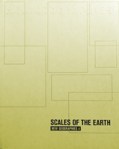 “Viewing the Earth from Without or from Within” with Nina Edwards Anker, New Geographies 4 (2011), 89-94.
Download PDF here
Get the journal here
The first Apollo images of the Earth have produced a perspective enabling humanity to act on Earth and its nature as if it controlled it from “outside.” The recent developments of satellite technologies have had a significant impact on the modes of representations as well as the conceptions of geography and space. Today, the visualization modes of geospatial information, which offer layering, zooming and panning navigation tools that capture world landscapes through vertical perspectives, reinforce the concept of the Earth as an “object.” Furthermore, the integration and superimposition of geographical information strengthen the Universalist ideal of knowledge while reducing it to a scientific and abstract visual database. This new “geography from above” -the home, the city, entire territories, the Earth itself, the Monn, Mars and beyond- redefine our environment, subjectivities and practises. With such tools at hand, architects conceive of the geographic as a possible scale, site of intervention and design approach.
The scale of vision, viewpoint and qualification of space made possible by satellite imagery reframe contemporary debates on design, agency and territory. In volume 4 of New Geographies, we invite sumissions of articles and projects that critically address the relationship of space with such modes of representation. What are the characteristics of such an integrated elevated vision and what geographical knowledge does it bring forth? In this data-space, which information is to be retained as relevant? How is such an analytical space to be subsequently interpreted and experienced? What are the cultural, political and environmental repercussions of a vision celebrated as objective and Universalist? what new global issues and debates do such scales of vision raise and how do such visualizations of the Earth-as-home intesect with concerns of ecology and calls for global awarness?
Plant Community
 “Plant Community,” in Schwarz, A.E. & K. Jax (Eds.), Ecology Revisited, (Berlin: Springer, 2011), 325-331.
The Danish botanist Warming coined the plant community concept in his book “Plantesamfund” in 1895. It has a neo-Lamarckian, morphological, and religiously informed understanding of plant geography. The community concept also drew its inspiration from the Danish political and social environment. Warming was a patriotic defender of the King’s council’s ambition to expand the Danish Empire and the exploitation of natural resources. The plant community concept provided a tool for management of nature that was inspired by the King’s steering of human communities. Warming’s morphologically informed research in Brazil and his geographical explorations of Greenland were also of key importance in the development of his plant community concept.
My review of The Dawn of Green
 Harriet Ritvo, The Dawn of Green
American Historical Review, Dec. 2010, 1532-3.
My review of Environment and Empire
 William Beinart and Lotte Hughes, Environment and Empire
The Economic History Review, 61:3 (2008), 740-741.
My review of From Enslavement to Environmentalism
 David McDermott Hughes, From Enslavement to Environmentalism: Politics on a South African Frontier
Canadian Journal of History, 42 (2007), 373-375.
My review of Toxic Exposures and Breathing Space
 Phil Brown, Toxic Exposures: Contested Illnesses and the Environmental Health Movement (2007)
Gregg Mitman, Breathing Space: How Allergies Shape Our Lives and Landscapes (2007)
Science, 318 (5. Oct. 2007), 46-47.
My review of Form follows Libido
 Sylvia Lavin, Form Follows Libido: Architecture and Richard Neutra
Pioneer America Society Transactions, 30 (2007), 79-81.
Idle Pondering about Environmental Politics
 My review of:
Paul R. Josephson, Resources Under Regimes: Technology, Environment, and the State
Minerva, 45 (2007), 93-95.
My review of Ecological Paradigms Lost
 Cuddington and Beisner (eds.), Ecological Paradigms Lost
Isis, 97 (2006), 808.


 Peder Anker