Posts filed under ‘Media’
Urbanista review of GDNYU London
“Elsewhere Envisioned – Global Design NYU” Urbanista, Feb 2013.
Global Design NYU London 2012
ARCHITECTS and DESIGNERS TAKE ON GLOBAL WARMING in LONDON
“Energy-saving technologies are not enough to stem climate change,” says host group from NYU
A groundbreaking exhibition series explores how architecture and design can help reduce climate change and bridge the gap between people and the natural world.
“Elsewhere Envisioned” will draw more than 30 leading designers, architects, landscape architects, urbanists, historians, and scientists to London’s Building Centre from 20 September to 20 October, 2012.

Hosted by NLA – London’s Centre for the Built Environment, “Elsewhere Envisioned” is presented by GLOBAL Design NYU (GDNYU), directed and curated by New York University’s Gallatin School of Individualized Study professors Peder Anker, Louise Harpman, and Mitchell Joachim.
WHAT: “Elsewhere Envisioned”
WHEN: 20 September – 20 October, 2012
WHERE: The Building Centre, 26 Store Street, London, WC1E 7BT
WHO: Free and open to the public
ON VIEW: Drawings and physical models by leading architects and designers
Participants include: Aberrant (UK), ACME (UK), atmos (UK), AWP (France), BIG (Denmark), Biothing (UK), BLOOM (UK), Creus and Carrasco (Spain), CUAC (Spain), David Kohn (UK), doxiadis+ (Greece), Code: Architects / Eriksen + Skajaa (Norway), Fantastic Norway (Norway), Groundlab (UK), Haugen/Zohar (Norway), HHF (Switzerland), Jestico + Whiles (UK), J. Mayer H. (Germany), LAVA (Germany, Australia), Ordinary [Magnus Larsson & Alex Kaiser] (UK), Mi5 (Spain), MMW (Norway), NEA Studio (Norway, USA), New Territories (France), OSA_Office of Subversive Architecture (Germany), Rachel Armstrong (UK), Raumlabor Berlin (Germany), Serie (UK), SLA (Denmark), Specht Harpman (USA), Studio Weave (UK), Terreform ONE (USA), Topotek1 (Germany)
VISIT www.gdnyu.com
BLOG nyudesign.blogspot
LIKE Global Design NYU
TWEET @gdnyu
From Social Psychology to Ecology
Arthur Tansley once amazed his botanical friends by arguing that the psychologist Sigmund Freud was the most important thinker since Jesus. It was indeed remarkable statement for a man who is known for his contributions to the field of ecology. Yet Tansley was also a keen contributor to research on sex-psychology and I suggest here that some of his ecological thinking emerged from his work in social psychology.
My Interview in Adam Curtis’ BBC TV Documentary
 All Watched Over by Machines of Loving Grace
2. The Use and Abuse of Vegetational Concepts
Article in The Observer “How the ‘ecosystem’ myth has been used for sinister means” by Adam Curtis. Check also out this Curtis interview and documentary Wikipedia page.
Broadcast on BBC Two, 9:00 p.m. Monday, 30 May 2011: A series of films exploring the idea that we have been colonised by the machines we have built. Although we don’t realise it, the way we see everything in the world today is through the eyes of the computers.
This is the story of how our modern scientific idea of nature, the self-regulating ecosystem, is actually a machine fantasy. It has little to do with the real complexity of nature. It is based on cybernetic ideas that were projected on to nature in the 1950s by ambitious scientists. A static machine theory of order that sees humans, and everything else on the planet, as components – cogs – in a system.
But in an age disillusioned with politics, the self-regulating ecosystem has become the model for utopian ideas of human ‘self-organizing networks’ – dreams of new ways of organising societies without leaders, as in the Facebook and Twitter revolutions, and in global visions of connectivity like the Gaia theory.
This powerful idea emerged out of the hippie communes in America in the 1960s, and from counterculture computer scientists who believed that global webs of computers could liberate the world.
But, at the very moment this was happening, the science of ecology discovered that the theory of the self-regulating ecosystem wasn’t true. Instead they found that nature was really dynamic and constantly changing in unpredictable ways. But the dream of the self-organizing network had by now captured our imaginations – because it offered an alternative to the dangerous and discredited ideas of politics.
Check out Stephen Duncombe’s excellent piece “Adam Curtis: Dystopian Dialectics, ” Photoworks, Jan 15, 2014.
Teaser:
GLOBAL Design NYU: Elsewhere Envisioned
 For the first time in its history, NYU’s Gallatin School of Individualized Study gathers leading-edge architects, designers, and theorists to address design issues that affect global ecology and the environment.
This exhibit of architectural models, drawings, animations, and projections, combined with a two-day symposium, brings together designers, scholars, and innovators to showcase design research as it relates to visionary architecture, landscape architecture, urbanism, and ecological planning.
Global warming effects pose new challenges to the architecture, landscape architecture, and urban design communities. The immediate response has been a turn toward a host of energy-saving technologies. What has rarely been addressed, however, is the problem of scale. How can the designer make sure that global solutions do not come at the expense of local traditions, cultures, and environments? By placing human rational, emotional, technological, and social needs at the center of our environmental concerns, we propose a new GLOBAL [Global Local Open Border Architecture and Landscape] design initiative.
We seek a Global yet still Local design that can Open the sociopolitical Borders that all too often separate Architecture from its Landscape. The overreaching aim is to develop a language of design that can create proximity between individual responsibility and the current global environmental crisis. We see environmental problems as a crisis of human alienation from the natural world, and our initiative will explore ways in which design can reformat the unfortunate separation. In our plea for proximity between the individual and the global we will explore, in the words of Maurice Merleau-Ponty, a design that is “as close to the beyond as to things near” when we evoke “our power to imagine ourselves elsewhere.”
GLOBAL DESIGN | ELSEWHERE ENVISIONED is directed and curated by Gallatin professors Peder Anker, Louise Harpman, Mitchell Joachim with support from the Gallatin Design Collective.
Sponsors include Susanne Wofford, Dean of the Gallatin School of Individualized Study, NYU Office of the Provost, Global Research Initiatives Program; NYU Office of Sustainability; Gallatin Community Learning Initiative; NYU Environmental Studies Department.
http://www.gdnyu.com/
Register | Event on Facebook | Facebook | Twitter | Blog
Sharing a love for the environment
“Sharing a Love for the Environment” (Interview) in Colloquy, Spring 2002, 21.
Fjordschritt
 “Fjordschritt,” Sueddeutsche Zeitung Magazin, June 26, 2002, 18
From Bauhaus to Ecohouse Featured in Süddeutsche Zeitung Magazin
View my interview about From Bauhaus to Ecohouse: A History of Ecological Design in Süddeutsche Zeitung Magazin. [PDF]
[German] “Die Ökoarchitektur kann viel vom Bauhaus lernen: Hausbau und Umweltbewusstsein – das müsste längst völlig selbstverständlich zusammengehören. Aber von wegen. Der Wissenschaftshistoriker Peder Anker könnte glatt verzweifeln, doch zum Glück weiß er um den Vorbildcharakter der Bauhaus-Architektur.”
by Von Thomas Bärnthaler
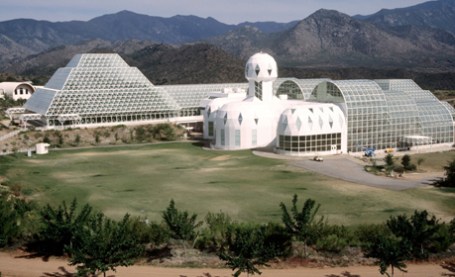
Der Gebäudekomplex “Biosphäre” in Arizona simulierte ein geschlossenes Ökosystem und hatte bedeutenden Einfluss auf die Ökoarchitektur


 Peder Anker