Posts filed under ‘Home’
Burning Down the House
“Burning Down the House,” with Mitchell Joachim, Log 65 (2025), 79-85.
Hold tight
We’re in for nasty weather
There has got to be a way
Burning down the house.
Get Log 65 here.
Frack Off! A Puppet Play
Frack Off! A Puppet Play, with Michael D. Dinwiddie, (New York: Barnes & Noble, 2025).
Frack Off! unfolds amid one of the most volatile moments in recent American politics, the 2016 Trump campaign, when disbelief, exhilaration, outrage, and amusement collided. As the MAGA movement surged and public debate turned electric, the nation seemed to teeter between spectacle and seriousness.
Instead of adding to the digital noise, Peder Anker and Michael D. Dinwiddie turn back to an older medium: European puppet theatre. Here, the devil scheme, dogs speak blunt truths, and stereotypes shrink to wooden likenesses we can finally see clearly enough to laugh at. Blending satire, tradition, and contemporary anxiety, Frack Off! offers a puppet play for our troubled, uncertain times.
Get the play here
Planifier une nouvelle écologie humaine
“Planifier une nouvelle écologie humaine”, Empires. Une histoire sociale de l’environnement, édité Guillaume Blanc, Antonin Plarier, (Paris: CNRS éditions, 2025), 81-139.
La science écologique s’est étendue de la botanique à la foresterie, jusqu’à
la zoologie, et nous allons étudier ici la manière dont elle s’est étendue
aux humains, dans les années 1930 et 1940. À l’époque, la recherche
en écologie humaine ne se cantonnait pas à l’homme stricto sensu, bien
au contraire : botanistes, forestiers, zoologues et autres spécialistes se
tournaient en masse vers cette discipline pleine d’avenir.
Traduit de Imperial Ecology, 2002.
General Groves Invented the Atomic Bomb

For the love of bombs, let us say farewell to Oppenheimer as the father of the atomic bomb. Instead of him, we should give the credit for inventing the bomb to the man in charge of the Manhattan Project in the first place, Brig. Gen. Leslie Groves.
“General Groves Invented the Atomic Bomb, not Oppenheimer,” Bulletin of the Atomic Scientists, July 21,2025.
Coding Plants
Coding Plants: An Artificial Reef and Living Kelp Archive
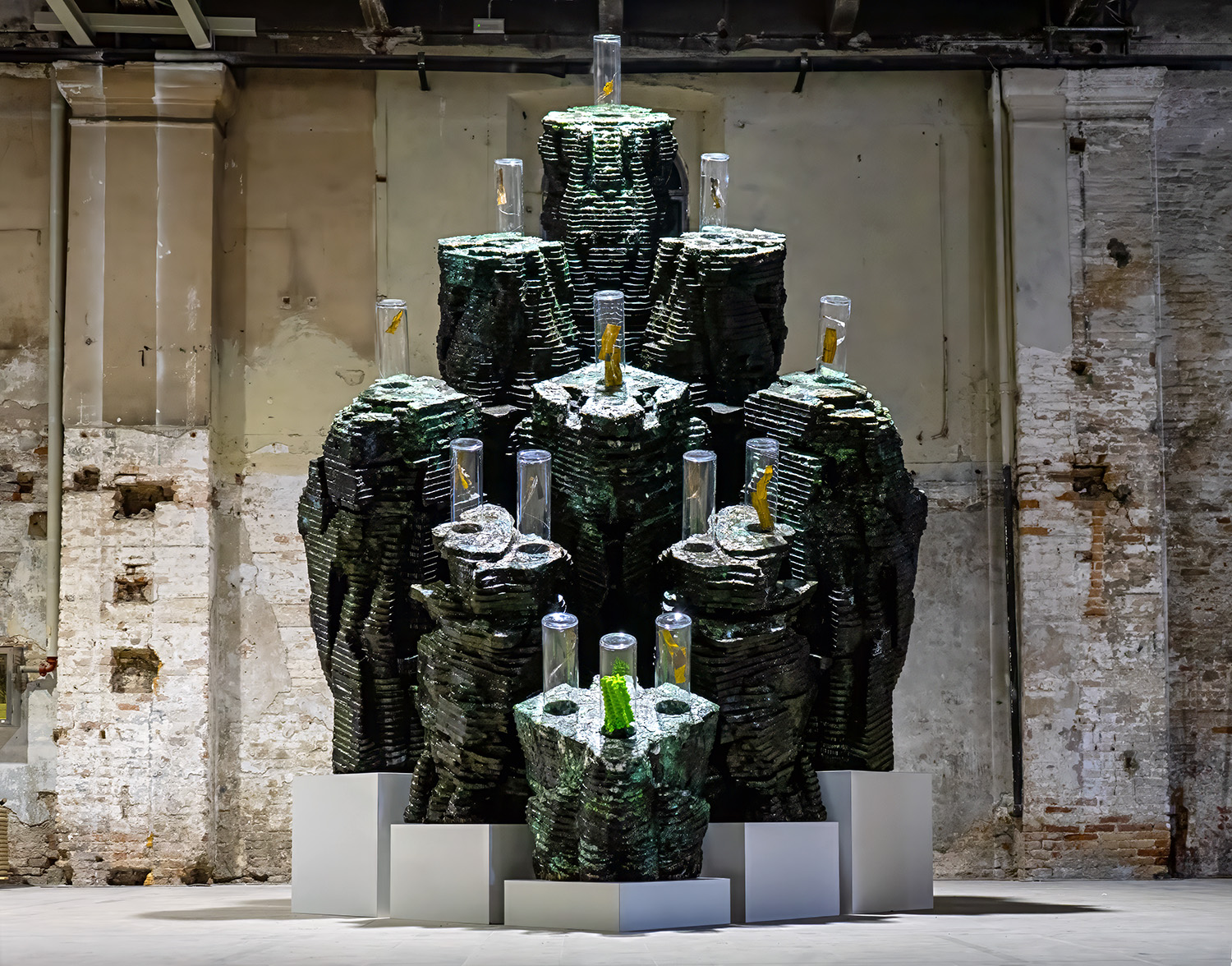
19th International Architecture Exhibition: Intelligens. Natural. Artificial. Collective.
Venice, May 10 – Nov. 23, 2025.
This is a neo-natural kelp reef where architectural records are transformed into edible proteins. Encased in air-tight vitrines, a collection of suspended, dried seaweed specimens showcases a transgenic process. Scientists have embedded encoded information—texts, images, and drawings—directly into the genetic material of this engineered vegetation, effectively turning the reef into a living, edible library. The 3D model at the center of the reef physically represents the phrase Form Follows Function, ciphered in the AGTC sequence of DNA. This exhibition is accompanied by the sound composition Earth Ocean, by Paul D. Miller aka DJ Spooky.
The title Coding Plants reflects our vision of embedding digital information into living systems to transform how we design and build. A single gram of plant DNA can theoretically store up to 215 million gigabytes of data. The project articulates a dual premise: the encoding of semantic and spatial information within botanical systems, and the broader implication of living matter as programmable infrastructure. While kelp is technically a macroalgae, not a plant, we use the term “plants” broadly—referring both to botanical life and to systems of production, as in “manufacturing plants.” Kelp serves as our transgenic prototype due to its ecological value and its potential for DNA-based data storage. The name signals a future in which living organisms—plant or otherwise—become computational, functional elements of architecture.
In the future, libraries won’t be built, but grown. Botanical organisms will be genetically augmented to store the knowledge of specific architectural forms—houses, bridges, communal spaces, and more—that can be extracted and used to challenge polluting construction methods. The goal is to design urban environments that adapt and evolve in balance with their surrounding metabolism. Plants will function as living archives, encoding detailed information within their DNA, allowing users to guide and influence their growth and structural form. This approach integrates radical sustainability directly into a semi-natural ecosystem, creating a harmonious blend of hybrid nature and human innovation.
Coding Plants is a synthetic living reef that serves as the ultimate archive of design knowledge. By embedding complex architectural intelligence into live organisms, Coding Plants proposes a climate positive agenda in which nature is empowered at the genetic level. While this vision may appear speculative, it is grounded in recent breakthroughs in genetic engineering. This approach heralds a fertile architecture that reimagines conventional building practices while fostering resilience, adaptability, and ecosystem integration.
Publications
“Coding Plants,” Intelligens. Natural. Artificial. Collective: Exhibition Catalogue, Carlo Ratti (ed.)(Venice, IT: Biennale Architectura, 2025), 100.
“Coding Plants” e-flux architecture, May 8, 2025.
Press
«20,000 Files Under the Sea,» NYU News, July 30, 2025.
“In Venice, an Architecture Biennale with a Dystopian Flair“, Architectural Record, May 30, 2025.
“Maybe Venice is the city that can save the world, BBC, May 26, 2025.
“Apre la Biennale di Venezia,” Interni, May 9, 2025.
“La mostra Intelligens,” Elle decor, May 10, 2025.
“Harvard Graduate School of Design Community Makes a Strong Showing at the 2025 Venice Architecture Biennale,” GSD News, May 9, 2025.
Credits
Project: Terreform ONE, Mitchell Joachim, Peder Anker, Melanie Fessel, Paul D. Miller (aka DJ Spooky). Studio: Vivian Kuan (Executive Director), Julie Bleha. Design: David Paraschiv, Emily Young, Sky Achitoff, Avantika Velho, JJ Zhijie Jin. Science: Sebastian S. Cocioba, Chris Woebken, Oliver Medvedik. Collaborators: Wendy W. Fok, WE-DESIGNS. Media: Michelle Alves De Lima. Research: Nicholas Lynch, Ava Hudson, Marina Ongaro, Jerzelle Lim, Helen Gui. Sponsors: U.S. National Endowment for the Arts, Global Research Initiatives, Office of the Provost, New York University. Global Design NYU, Gallatin School of Individualized Study, New York University. Oslo School of Architecture and Design. RheinMain University of Applied Sciences. Special Thanks: Carlo Ratti, Curator of the 19th International Architecture Exhibition. Victoria Rosner, Dean of Gallatin School of Individualized Study at New York University.
My review of Energy in the Nordic World
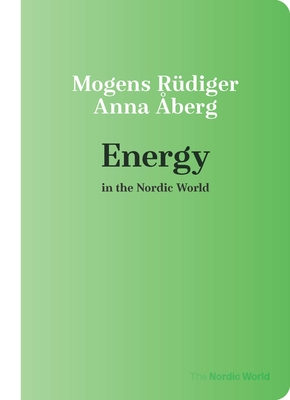
Anna Åberg and Mogens Rüdiger, Energy in the Nordic World, Technology and Culture 66:1 (2025), 271–72. [PDF]
For the Love of Bombs

For the Love of Bombs: The Trail of Nuclear Suffering (London: Anthem Press, 2025).
Abstract
The truism that history is written by its winners reflects the literature about how the bomb came about, with apologetic books most often written by U.S. scholars. The physicist Robert Oppenheimer, the nuke’s ‘father’, is repeatedly centre stage, as in the case of the recent film about him. These are elitist stories that more often than not ignore the suffering and violence of the bomb to laypeople in general, and to marginalised groups in particular. Starting with the gruesome mining of uranium by First Nation people in northern Canada, and continuing with the racialist culture of uranium enrichment in the Atomic City of Oak Ridge, Peder Anker offers alternative perspectives. It’s a story of how the bikini swimwear came to fetishise the nuclear bombardment of the Bikini Atoll with its celebration of ‘sex bombs’ and (an)atomic ‘bombshells’. Our current global warming fears also hearken back to ordinary citizens wondering if atomic bombs would blow up the entire sky. If some of this was news to you, it might have to do with how the story of nuclear bombs has been told.
Review
Anders Dunker, “Bomben er ingen metafor,” Ny tid, April 20, 2025. [PDF]
Matthew Farish, “For the Love of Bombs,” H-Net, June 2025.
Blog and op-eds
“Leslie R. Groves Invented the Atomic Bomb,” Bulletin of Atomic Scientists, July 21, 2025.
“Farewell Oppenheimer” Anthem, Jan. 29. 2025.
“The stories ‘Oppenheimer’ didn’t tell” Washington Post, March 15, 2024. [PDF]
“Årets verste film” Klassekampen, March 13, 2024. [PDF]
Podcast
New Books Network, with Miranda Melcher, March 30, 2025.
In the news
Janae Antrum, “Understanding the narrative 80 Years Later: African Americans and the A-bomb,” New York Amsterdam News, July 24, 2025.
Jade McClain, “Gallatin Professor Wants the Oppenheimer Narrative Up in Smoke,” NYU News, April 17., 2025.
Get the book
US $ | Eur € | Brit £ | Can $ | Barnes & Noble | Anthem Press
Transitioning to Sustainable Cities

The unmatched influence that human societies are wielding on the natural world is a given based on changes in climate and the environment, also called the epoch of the Anthropocene. Do we need to investigate how that dominance changes the life of plants and animals in urban areas?
“Interview with Mitchell Joachim, Peder Anker and Nicholas Gervasi” in Transitioning to Sustainable Cities and Communities, Hubert Klumptner (et.al, eds.), (Basel: MDPI Books, 2024), p. 137-148. [PDF]
Views from the Outside

Climate change is a critical challenge facing our communities. Studies conducted by IPCC and other entities continue to demonstrate the enormous magnitude of this challenge and the increasing need for more effective responses at both the adaptation and mitigation levels. The complex causes of climate change and its diverse impact on our communities make this need more challenging. Making things more complicated, understanding these causes and consequences, as well as the possible solutions, requires us to look at the problem through multiple disciplinary lenses.
Peder Anker, Marty Matlock, Malkin Shoshan & Hazem Rashed-Ali, “Views from the Outside” in Technology/Architecture + Design, 8(1) (2024), 8–10. [PDF]
Design Against Extinction
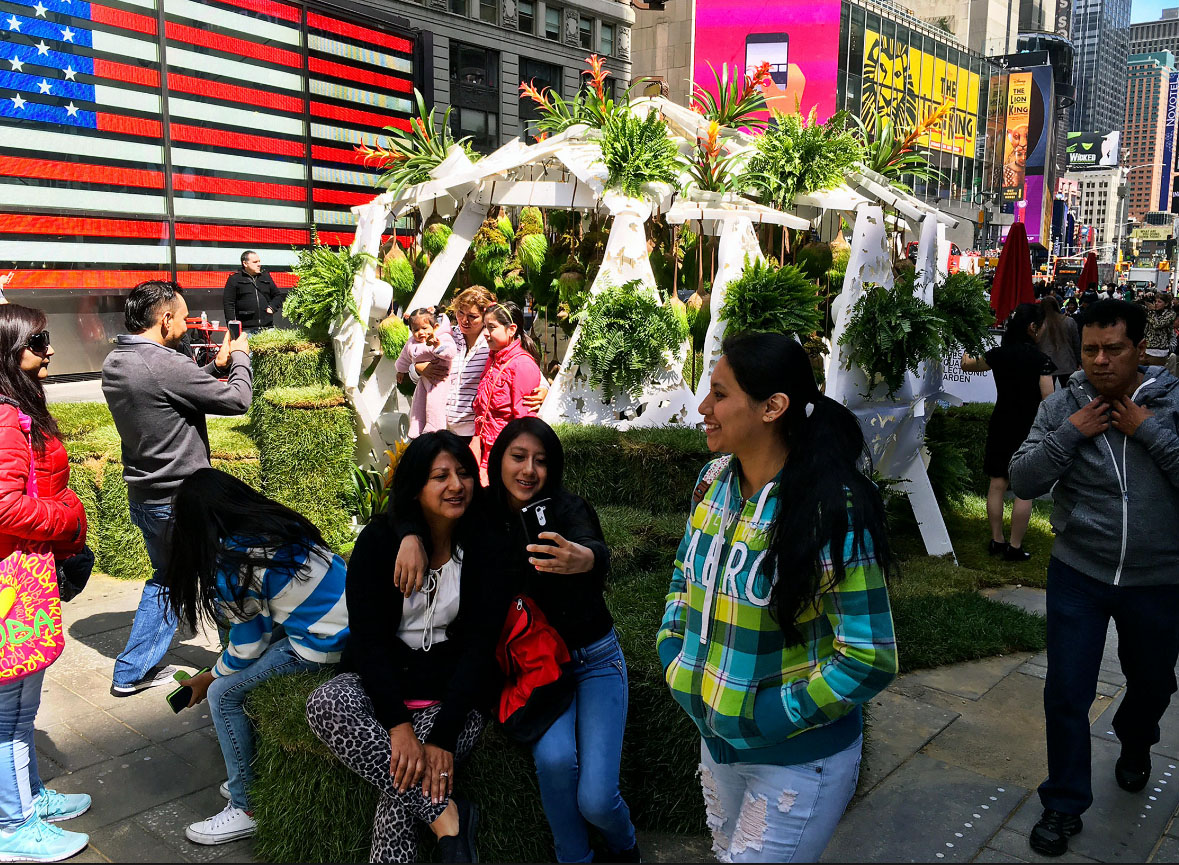
This article reviews the eco-social design work of students at the Gallatin School of Individualized Studies at New York University over the last decade. Environmental justice movements and the effects of global warming pose significant challenges to the architecture of dwellings, landscapes, and urban design communities. In response, students have placed socially and ecologically sensitive projects at the center of their design education. The justifiable moral outrage of our students has prompted us and them to rethink the methods by which we teach and imagine social environmentalism from the perspective of equity, inclusion, and the biosphere.
“Design Against Extinction at New York University,” with Mitchell Joachim, Spool, 10:1 (2023), 121-132. [PDF]


 Peder Anker